| What FBE is | Fusion bonded epoxy (FBE) is a thermosetting powder coating applied to prepared steel and cured using heat. | The cured epoxy layer helps protect steel from corrosion and provides a durable coating surface. |
| Typical coating thickness | About 300–500 μm (0.30–0.50 mm) for many single-layer pipeline FBE applications; the specified thickness depends on the project and coating system. | Thickness is selected to meet the required service, handling, and inspection requirements. |
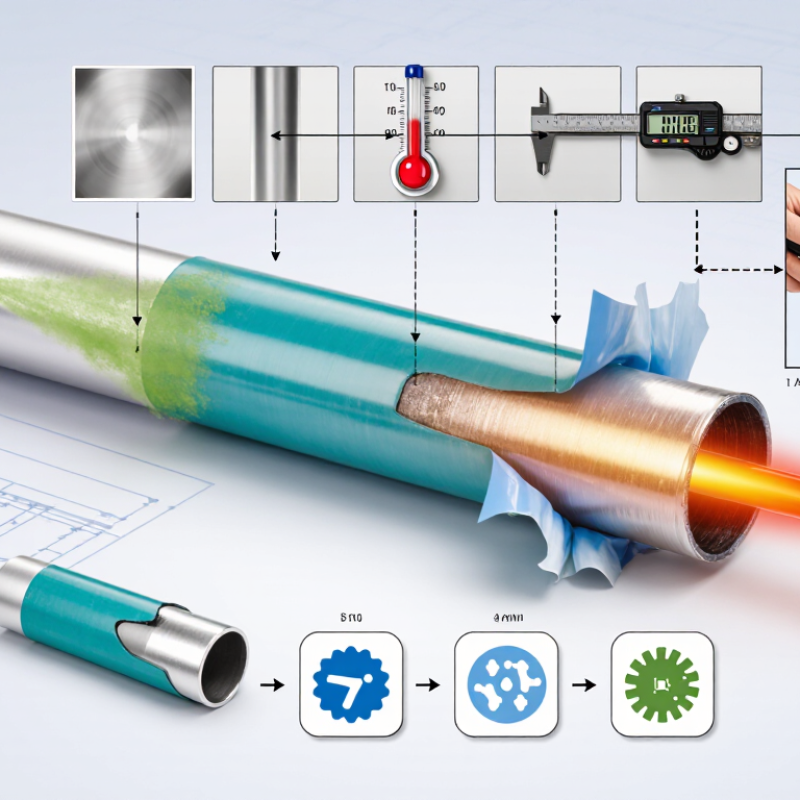
| Steel surface preparation | The pipe is typically abrasive-blasted to a near-white-metal cleanliness level, commonly described as Sa 2½ or SSPC-SP 10/NACE No. 2, subject to the project specification. | Removing rust, mill scale, and contaminants helps the coating bond consistently to the steel. |
| Surface profile | A controlled abrasive-blast profile is required. The acceptable profile range is set by the coating system and applicable specification. | An appropriate profile supports mechanical adhesion; an unsuitable profile can impair coating performance. |
| Preheating | After blasting, the pipe is heated to the temperature required by the selected powder and application procedure. The set point is not universal. | The hot steel melts the powder on contact and supports the flow and cure needed to form a continuous film. |
| Powder application | FBE powder is commonly delivered to the heated pipe by an electrostatic spray system, where particles melt and spread over the surface. | Uniform application helps achieve the specified thickness and avoid thin or uncovered areas. |
| Heat curing | The coating cures through a chemical reaction initiated by heat. Required time and temperature depend on the powder formulation, pipe temperature, and process specification. | Proper curing forms the thermoset coating film; under-curing or overheating can affect coating properties. |
| Inspection and testing | Quality checks commonly include visual inspection, dry-film thickness measurement, and holiday (discontinuity) detection, with acceptance criteria defined by the applicable specification. | Testing helps identify coating defects that may expose the steel to the environment. |
| Common use | FBE is widely used as an external corrosion-protection coating on buried or submerged steel pipelines; it can also be used in other specified steel-pipe applications. | The coating system should be selected for the pipe’s service conditions, installation method, and applicable project requirements. |
| Important qualification | Thickness, preparation, application, cure, and acceptance values vary by coating type, pipe dimensions, service conditions, and governing specification. | Use the project specification and coating manufacturer’s qualified application procedure for exact requirements. |



 © Copyright 2020 Tianjin Tanghaidongyang Valve Co., Ltd. All Rights Reserved.