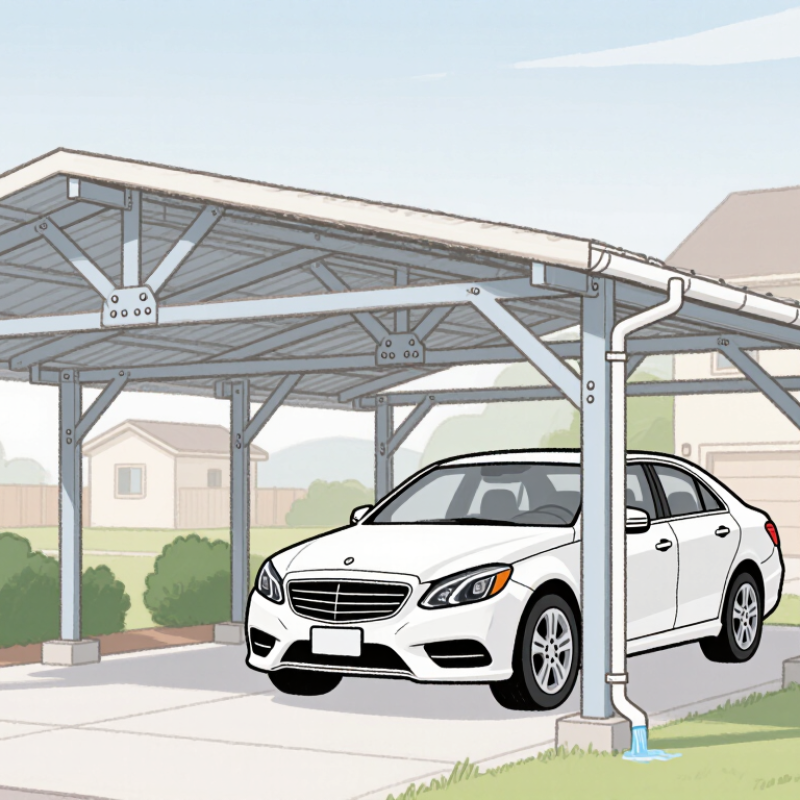
| Shade and everyday weather protection for vehicles | A roof provides shade and helps shield vehicles from rain, hail, and falling debris. Open sides allow airflow and convenient access. | Driveways, residential parking areas, and designated spaces beside a home | Choose a size that fits the vehicle and allows room for doors, walking, and maneuvering. An open-sided carport does not provide the same protection as an enclosed garage. |
| Covered storage for outdoor equipment | Covered space can help keep equipment out of direct sun and precipitation while keeping it accessible. | Garden tools, bicycles, lawn equipment, and recreational gear | Consider how items will be secured and whether wind-driven rain or dust may reach them through the open sides. |
| Protection for boats, trailers, or recreational vehicles | A taller or wider structure can provide overhead cover for larger vehicles that may not fit in a standard garage. | Boat parking, travel trailers, utility trailers, and RV storage | Measure the full vehicle height and length, including rooftop equipment or accessories. Confirm access clearance and local height restrictions. |
| Durable outdoor structure with manageable upkeep | Steel framing is non-combustible and is not susceptible to rot or insect damage. Coatings and maintenance needs vary by product and exposure. | Homes, farms, workshops, and other properties needing covered outdoor space | Inspect the frame and protective finish as recommended by the supplier, especially in coastal or corrosive environments. |
| Flexible covered space for work or recreation | An open structure can offer a sheltered area for tasks or activities that benefit from shade and ventilation. | Outdoor work areas, hobby spaces, and covered seating areas | For enclosed walls, electrical work, or a change of use, check applicable building, fire, and zoning requirements. |
| Site-specific wind, snow, and rain conditions | A properly designed and installed steel carport can be specified for local conditions; performance depends on its design, materials, anchoring, and installation. | Properties in regions with seasonal storms, snow, or heavy rainfall | Check local building codes and the structure’s documented design loads. Ensure foundations, drainage, and anchoring suit the site. |
| Additional covered parking without a fully enclosed garage | A carport can create covered parking while maintaining open access and natural ventilation. | Second vehicles, guest parking, or properties with limited garage capacity | Confirm setbacks, permits, property-line requirements, and any homeowners’ association rules before construction. |



 © Copyright 2020 Tianjin Tanghaidongyang Valve Co., Ltd. All Rights Reserved.