Why Choose a Submersible Drainage Pump?
A flooded basement rarely gives you time to compare equipment. Water creeps across the concrete, carrying grit, leaves, and the occasional small stone. In that moment, a Submersible Drainage Pump can offer a practical advantage: it works while submerged, moving water from the source instead of relying on a long surface suction line. The right model can help clear a sump, construction pit, or low-lying work area with less setup.
Pump selection still takes care. Check the required flow rate, discharge height, water temperature, and the size of solids the pump can pass. A unit that looks powerful on paper may struggle against a long, narrow hose or frequent debris. Think about access, too: a pump buried under muddy water is harder to inspect. Small details matter.
For transparency, the following is an illustrative quotation, not a verified statement from a real expert. Fictional pump engineer Daniel Mercer puts the choice this way: “Match the pump to the water and the job, not just the horsepower.” It is a plain rule, but useful. Oversizing can waste energy; undersizing can leave water behind. Neither outcome is dramatic in a brochure. On a wet floor, they matter. This guide examines where submersible drainage pumps fit, what to check before buying, and which trade-offs deserve a second look.
What Is a Submersible Drainage Pump?
Why Choose a Submersible Drainage Pump?
What Is a Submersible Drainage Pump?
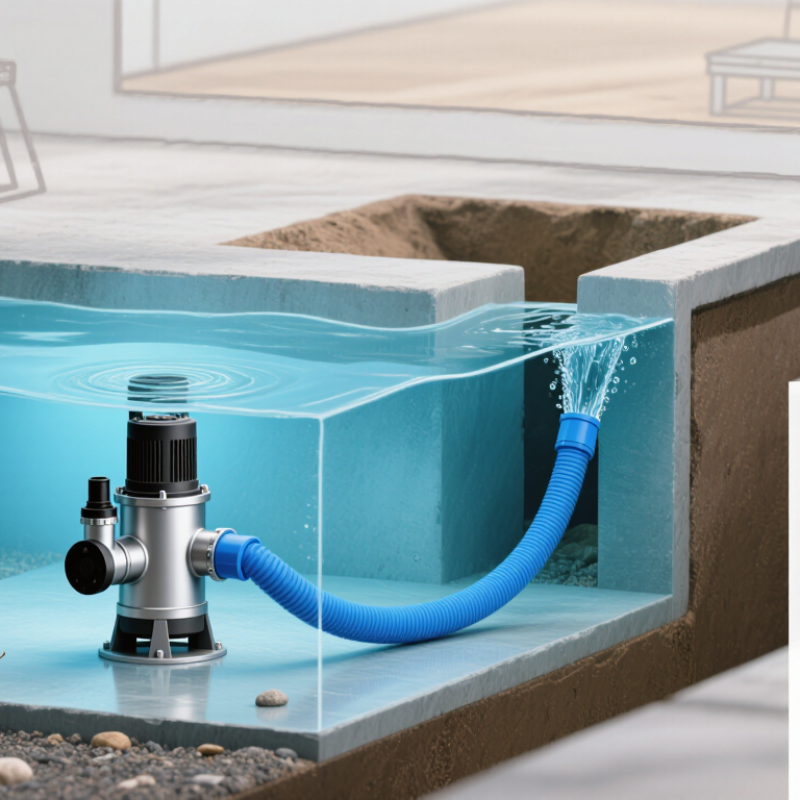
A submersible drainage pump is designed to operate while sitting in water. Its sealed motor housing helps protect electrical parts as water enters through an intake near the base. An impeller then pushes the water through a discharge outlet and hose. The pump usually needs to be fully or partly submerged, depending on its design. That distinction matters.
These pumps can help remove water from flooded basements, window wells, sumps, and shallow work areas. Some models include a float switch that starts and stops the pump as water levels change. Others require manual operation. “Drainage pump” does not mean every model can handle mud, leaves, or large debris; permitted particle size varies. Check the product specifications, because a blocked intake can quickly reduce flow. I would not assume a pump can run dry without damage.
Tips: Place the pump on a stable, level surface and keep its intake clear. Check the hose for kinks, and follow the manufacturer’s instructions for setup and electrical safety. If water keeps returning, the pump may be only part of the problem.
How Does a Submersible Drainage Pump Work?
A submersible drainage pump works while sitting in the water it needs to remove. Its sealed motor turns an impeller, which draws water through an inlet screen and pushes it into a discharge hose. In many common designs, this is centrifugal action: the spinning impeller increases water pressure, moving it toward the outlet. No priming is needed. A float switch can start the pump as water rises and stop it when the level falls. The exact switching range varies by model.
That sounds simple, but placement matters. Keep the inlet clear of leaves, grit, and loose fabric, and check the hose for kinks. Real installations are less tidy. A pump may leave a shallow layer behind, so check its specified minimum water level and avoid running it dry. The U.S. Department of Energy’s Improving Pumping System Performance: A Sourcebook for Industry reports that pumping systems can account for 25–50% of energy use in industrial facilities, depending on the facility. That figure is not specific to drainage pumps, but it shows why suitable sizing and operation matter. For drainage, match the pump’s flow and head ratings to the lift height and hose length; a higher flow rating alone does not guarantee faster removal.
Why Choose a Submersible Drainage Pump?
A submersible drainage pump operates underwater: its motor turns an impeller that draws water through the intake and pushes it into a discharge hose. Being submerged keeps the intake flooded, making it useful for draining flooded areas, pits, and tanks.
How to read the chart: In still freshwater, gauge pressure increases by approximately 9.8 kPa for every metre of depth. These values show hydrostatic pressure, not a pump’s rated output; when selecting a pump, check its flow rate and performance curve at the required lifting height.
What Benefits Does Submersible Operation Provide?
A submersible drainage pump sits in the water it moves, so it can start pumping without a separate priming step. No priming delay. Its flooded inlet helps maintain suction when water levels shift, while the compact setup avoids a long suction hose across a wet floor. In many designs, surrounding liquid also helps cool the motor during operation.
Placement close to the water source can reduce suction-side problems, such as air entering through loose connections. That is useful in a basement sump, construction pit, or low point where water collects around grit and leaves. The U.S. Department of Energy’s Improving Pumping System Performance sourcebook reports that pumping systems use nearly 20% of global electricity demand. That figure covers pumps broadly, not submersible drainage pumps alone, but it underscores why correct sizing and efficient operation matter.
Submersible operation can also keep much of the pump noise below the waterline and free up floor space. Still, it is not a magic fix. Seal condition, cable protection, water depth, and permitted solids size all matter; a clogged intake can stop drainage at the worst moment. I would check these details against the pump’s duty requirements, rather than assume every submersible model suits every pit.
Where Are Submersible Drainage Pumps Commonly Used?
Why Choose a Submersible Drainage Pump?
Where Are Submersible Drainage Pumps Commonly Used?
Submersible drainage pumps are used wherever water collects below the outlet level. In homes, they clear basement sumps, window wells, and shallow crawlspaces after seepage or heavy rain. On construction sites, crews use them in foundation excavations, service trenches, and elevator pits. A compact pump sits directly in the water, freeing floor space and reducing suction-hose setup. That helps.
But conditions vary. Utility crews may drain valve chambers, while farms may remove water from low sheds or irrigation channels. Property teams also use portable units in parking garages and loading bays. NOAA’s 2023 U.S. Billion-Dollar Weather and Climate Disasters report counted 28 events, with estimated losses of $92.9 billion. It is not a pump-use survey, but it documents costly storm conditions that can increase the need for local water removal.
Choose a pump based on water depth, discharge height, flow rate, and debris size—not just motor power. A basement seep needs different handling from muddy excavation water. Check whether the impeller can pass the expected solids, and route discharge away from foundations and walkways. In practice, leaves or gravel can still clog a pump. That detail is easy to miss. Field testing is wiser than assuming published maximum flow will match site conditions.
What Factors Matter When Choosing a Submersible Drainage Pump?
Why Choose a Submersible Drainage Pump?
What Factors Matter When Choosing a Submersible Drainage Pump?
Start with the water and the job. Estimate the required flow, total lift, and discharge-pipe losses; a pump’s advertised maximum flow rarely reflects performance at full head. Measure the pit and check how low the water must fall before shutdown. Fit matters. The U.S. Department of Energy’s 2006 Improving Pumping System Performance sourcebook estimates that pumping systems account for nearly 20% of global electricity use. That figure covers pumping broadly, not drainage pumps alone, but it shows why correct sizing and efficient operation matter.
Check the solids passage against what may enter the water: leaves, grit, or small debris can block an undersized inlet. Match the pump’s materials to the water, especially if it contains sediment or mild chemicals. Confirm the duty cycle, power supply, cable reach, and protection against overheating or running dry. For basements, a float switch should move freely and sit clear of walls and stored items. A narrow pit can make a suitable pump awkward to install.
Ask for a performance curve, not just a headline flow figure, and compare it with your actual lift. The Hydraulic Institute’s pump guidance emphasizes selecting equipment around the system’s operating point. A little uncertainty is normal: real inflow can change quickly during heavy rain. Leave practical room for that variation, but avoid buying far more capacity than the site needs.



 © Copyright 2020 Tianjin Tanghaidongyang Valve Co., Ltd. All Rights Reserved.