| Greater Stability | Three-wheel support with a wider standing footprint than a two-wheel bicycle | The extra wheel can make low-speed riding, stopping, and loading easier for many users. | Riders still need to reduce speed when cornering because three-wheel designs can be affected by uneven weight distribution. |
| Useful Carrying Capacity | Many utility models are designed for approximately 100–250 kg of combined rider, cargo, and accessories, depending on the model. | A rear or front cargo area can support groceries, tools, mobility equipment, or small deliveries. | The manufacturer’s maximum gross vehicle weight and cargo-rack limit should never be exceeded. |
| Electric Assistance | Common motor ratings range from about 250 W to 750 W, with power limits varying by local regulations. | Pedal assistance helps reduce effort when starting, carrying loads, or riding on moderate inclines. | Actual hill performance depends on motor torque, battery charge, rider weight, tire pressure, and gradient. |
| Typical Travel Range | Approximately 40–100 km per charge is common for many practical-use configurations. | This range can cover neighborhood errands, commuting, local service routes, and short-distance deliveries. | Advertised range is usually measured under specific conditions; heavy loads, hills, cold weather, and high speeds reduce it. |
| Lower Energy Cost | Electricity use is often about 0.15–0.30 kWh per km, depending on load, terrain, speed, and vehicle efficiency. | At an electricity price of $0.15 per kWh, energy costs are roughly $0.02–$0.05 per km before maintenance and battery replacement. | Actual savings depend on local electricity prices, charging losses, usage patterns, and battery life. |
| Convenient Charging | A full charge commonly takes about 4–8 hours using a standard charger. | Overnight charging can prepare the tricycle for daily local travel without requiring fuel-station visits. | Charging should be performed with the approved charger in a dry, ventilated location. |
| Quiet Operation | Electric drive systems produce substantially less operational noise than small gasoline engines. | Lower noise is useful in residential areas, parks, campuses, warehouses, and early-morning delivery routes. | Tire, brake, and road noise remain present, so riders should use lights, bells, and other safety equipment. |
| Reduced Local Exhaust Emissions | A battery-powered tricycle has no tailpipe emissions during operation. | It can help reduce direct exhaust pollution on routes where trips would otherwise use a gasoline-powered vehicle. | Total environmental impact also includes electricity generation, battery production, maintenance, and end-of-life recycling. |
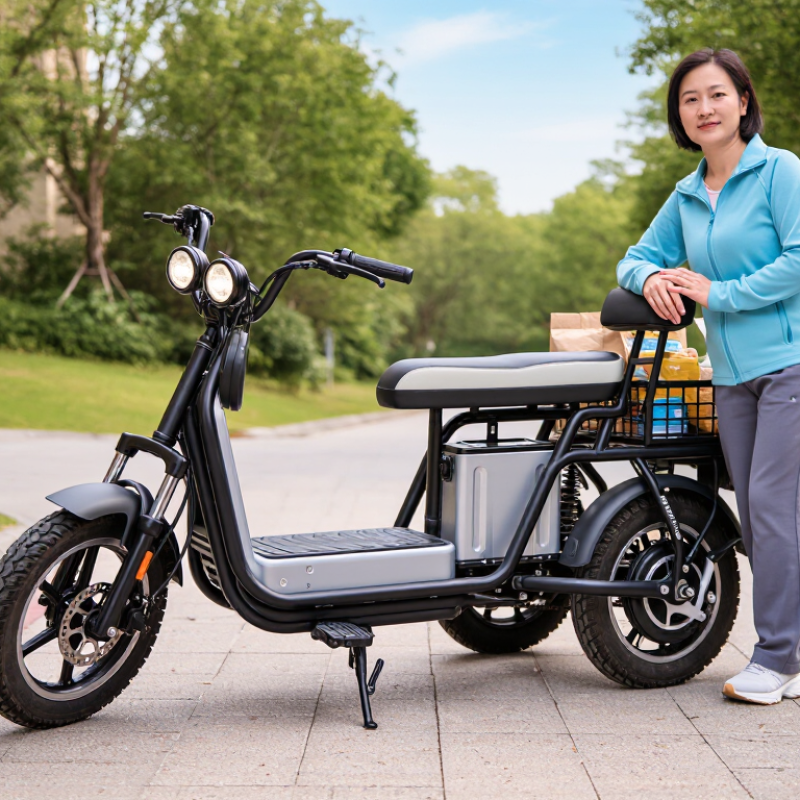
| Accessible Daily Mobility | Step-through frames, upright seating, adjustable assistance, and optional low-speed modes are available on many designs. | These features may benefit older adults, riders with reduced stamina, and people who need additional carrying support. | Fit, seat height, turning space, braking controls, and local accessibility requirements should be checked before purchase. |
| Simpler Routine Maintenance | Electric drivetrains generally have fewer engine-related service items than gasoline systems, such as oil and spark-plug changes. | Routine ownership can be simpler for short-distance transport and light commercial use. | Brakes, tires, chains, bearings, electrical connections, and the battery still require regular inspection and replacement when worn. |
| Best-Fit Use Cases | Local commuting, shopping, campus transport, neighborhood errands, mobility support, and short-distance delivery. | An electric tricycle is most effective when trips are relatively short, speeds are moderate, and charging is available at home or work. | Long highway travel, steep mountain routes, high-speed transport, and very large cargo loads may require another vehicle type. |



 © Copyright 2020 Tianjin Tanghaidongyang Valve Co., Ltd. All Rights Reserved.