Why Choose a Cast Iron Butterfly Valve?
A Cast Iron Butterfly Valve can be a practical choice when a system needs dependable shutoff, compact installation, and straightforward operation. Its quarter-turn disc opens or closes with a short handle movement, while the wafer-style body can fit between flanges in many common layouts. On a water line, that can mean less installation space and fewer turns of the handwheel. Useful advantages—but the service conditions still matter.
For a transparent expert voice, this introduction uses a fictional valve applications engineer, Alex Morgan: “Choose the valve for the fluid and duty—not just the purchase price.” That is a rule of thumb, not a sourced quotation. Cast iron bodies are often considered for water, HVAC, and other compatible services, but pressure, temperature, corrosion, lining, and seat materials must match the actual application. Check the manufacturer’s ratings and installation guidance. Small details count. A mismatched elastomer can wear early; poor alignment can affect sealing. Cast iron is strong, but it is not the right answer for every medium or operating condition. The honest choice begins with the line’s real demands, not a catalog label.
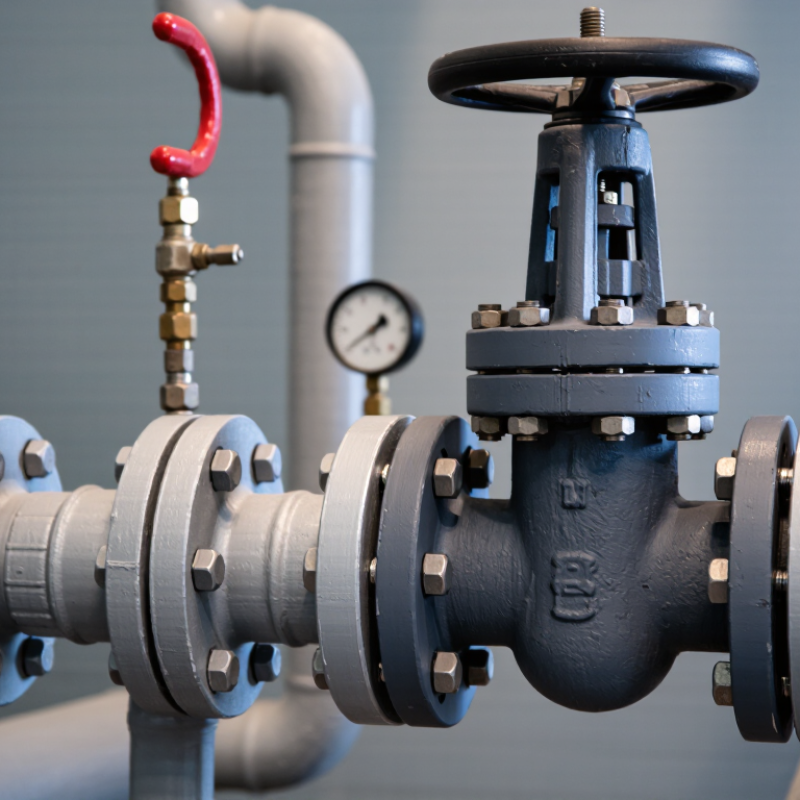
Cast Iron Butterfly Valves: Disc Design and Quarter-Turn Operation
A cast iron butterfly valve controls flow with a disc mounted inside a compact body. A stem turns the disc through a quarter turn, from open to closed. In the open position, the disc sits across the flow path, so it still creates some resistance. When closed, the disc presses against a seat to limit flow. Simple motion. Fewer turns can also make operation quicker than with many multi-turn valves.
Disc shape and seat condition affect how the valve performs. A centered disc is common, while other designs shift the stem or disc to reduce rubbing during operation. The right arrangement depends on pressure, temperature, fluid, and how often the valve cycles. Cast iron suits many general service applications, but it is not a universal choice. Check the valve’s rated limits and confirm that the body and seat materials match the fluid.
One detail that can be missed: pipe misalignment may strain the body or affect sealing. Installation deserves care.
Tips: Before installation, move the disc through its full quarter turn and check for smooth travel. Keep the disc clear of debris, and support the piping properly. If closing torque rises, investigate instead of forcing the handle. A stiff valve is a warning, not a workout.
Material Data: ASTM A126 Class B Gray Iron, 214 MPa Minimum Tensile Strength
Why Choose a Cast Iron Butterfly Valve?
Material Data: ASTM A126 Class B Gray Iron, 214 MPa Minimum Tensile Strength
ASTM A126 Class B gray iron offers a useful strength benchmark for cast iron butterfly valve bodies. Its minimum tensile strength is 214 MPa, describing resistance to pulling forces in a standardized material test. That matters. In service, the valve body must also handle pressure, temperature changes, installation loads, and connected pipework. A material figure alone cannot establish a valve’s pressure rating.
Gray iron is commonly selected for water and other compatible, relatively low-pressure duties. Its rigidity can support a stable body around the disc and shaft. However, gray iron is less tolerant of impact and sudden stress than ductile materials. A dropped valve or unevenly tightened bolts may cause damage that is not obvious at first. Check the pressure-temperature limits, face-to-face dimensions, and media compatibility before selection. I would not treat 214 MPa as a working-pressure value; it is a tensile-test minimum, not the system rating.
Tips: Inspect the casting for visible cracks, confirm the flange standard, and tighten bolts evenly in a cross pattern. Avoid using the body to correct pipe misalignment. If the application involves water hammer, vibration, or frequent cycling, review those conditions with a qualified valve specialist. Gasket choice can affect sealing, too.
Valve Standards: API 609 Categories A and B
Why Choose a Cast Iron Butterfly Valve?
API 609 Categories A and B describe different butterfly valve designs, not simply two quality grades. Category A valves are typically concentric and resilient-seated. They suit many general isolation duties where compatible fluids and operating conditions allow. Category B valves use offset-disc designs, with resilient or metal seating depending on construction. The offset geometry can reduce seat contact during travel. That may help in demanding cycling or temperature conditions, but it does not guarantee better performance in every installation.
Cast iron can offer a practical, economical body for suitable services. But API 609 does not, by itself, confirm that a cast iron valve fits your pressure, temperature, or fluid. Check the valve’s pressure-temperature rating, seat material, end connections, and specified test requirements. A category label alone is not enough. For example, a valve in a water line may face grit, frequent operation, or pressure surges; each can change what seat and disc arrangement makes sense.
Look closely at the datasheet. Confirm the exact API 609 edition and category, then compare them with the project specification. Also verify that the body material is appropriate for the fluid and site conditions. One detail is often overlooked: shutoff performance depends on the complete valve design and its stated testing, not just the category. A careful match takes a little more time. It can prevent an expensive mismatch.
Common Uses: Water, HVAC, and General-Purpose Pipeline Systems
Why Choose a Cast Iron Butterfly Valve?
Common Uses: Water, HVAC, and General-Purpose Pipeline Systems
Cast iron butterfly valves are often selected for water lines, building HVAC loops, and utility piping because their compact bodies fit where gate valves may need more space. A quarter-turn handle or actuator opens and closes the disc quickly. In a chilled-water room, that can make routine isolation simpler during pump or coil maintenance. They are practical, not universal. Check the body’s pressure and temperature ratings, seat material, and fluid compatibility before choosing one.
In general-purpose systems, these valves can provide shutoff and, when the design allows, flow control. They are commonly installed on cooling-water, circulating-water, and low-pressure service lines. A common oversight is matching the valve size to the pipe while ignoring actuator torque or access for maintenance. The result can be a valve that fits neatly but is awkward to operate. Also, cast iron may not suit every corrosive fluid or demanding pressure condition. The details matter.
Tips: Confirm the intended service, operating range, and connection type against the project specifications. Leave enough room for the disc to swing fully, especially near elbows and pumps. Not every setup allows that. If the valve will sit partly open for long periods, verify that its design supports throttling; otherwise, wear or unstable flow may become a concern.
Selection Factors: Pressure Rating, Valve Size, Seat Material, and Service Conditions
A cast iron butterfly valve can suit many water and utility lines, but the body material alone does not determine suitability. Start with the required pressure rating at the operating temperature. Include pump-start surges and other pressure spikes, not just the normal gauge reading. Check the manufacturer’s pressure-temperature data for the exact valve configuration. Ratings vary.
Match the valve size to the pipe and expected flow. An undersized valve can restrict flow; an oversized one may be harder to control accurately. Confirm flange compatibility and available space for the disc to rotate. Fit matters. Choose a seat material for the actual fluid and temperature range. EPDM is often considered for water service, while other fluids may require a different compound. Verify compatibility against a technical chart; additives can change the answer. Also consider solids, frequent cycling, outdoor exposure, and cleaning chemicals. These details are easy to overlook. A selection can look correct on paper and still wear quickly in service. Check operating conditions carefully.
Why Choose a Cast Iron Butterfly Valve?
Seat material affects a butterfly valve’s suitability for the fluid and operating temperature. The ranges below are approximate examples; actual limits vary by compound, valve design, and manufacturer.
Selection note: Confirm the valve’s pressure rating at the required temperature, choose a size that suits the pipe and flow conditions, and check seat compatibility with the fluid, temperature, and duty cycle.



 © Copyright 2020 Tianjin Tanghaidongyang Valve Co., Ltd. All Rights Reserved.