| Residential Rooftop Systems | Rigid panels are widely suited to pitched and flat residential roofs where long-term structural support is available. | Homes, garages, carports, and small outbuildings. | High power density, durable framed construction, established installation methods, and broad compatibility with roof mounting hardware. | Check roof age, load capacity, shading, waterproofing, roof orientation, and local wind and snow requirements. | Roof hooks and rails for pitched roofs; ballasted or mechanically attached systems for suitable flat roofs. | Excellent |
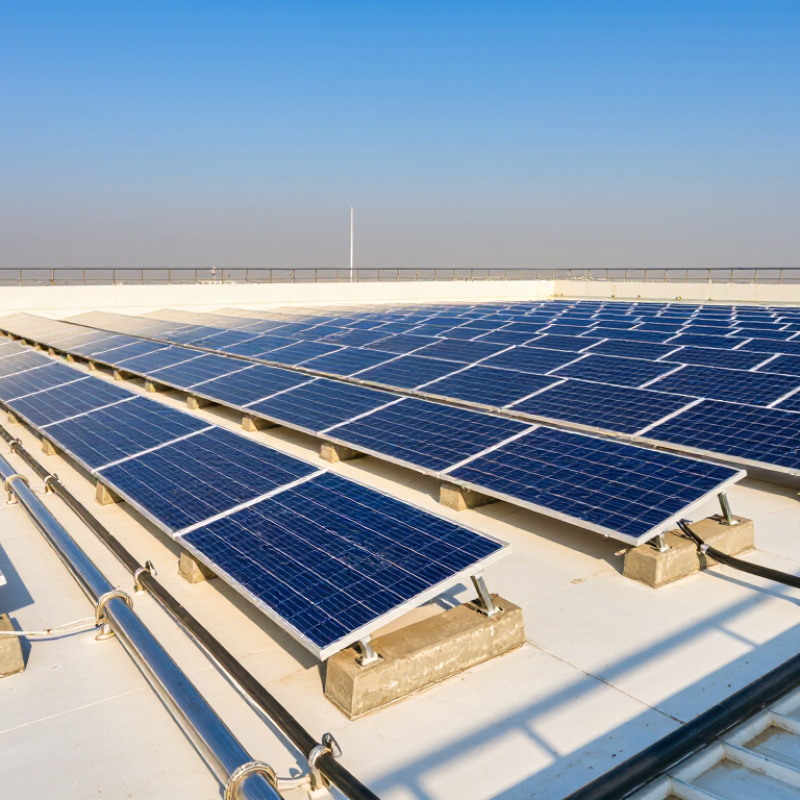
| Commercial and Industrial Rooftops | Highly suitable when the roof structure can support the additional dead load and maintenance access is planned. | Factories, warehouses, offices, retail buildings, and logistics facilities. | Efficient use of large roof areas, scalable system design, strong mechanical protection, and straightforward array layout. | Assess roof loading, membrane protection, fire access routes, drainage, wind uplift, and equipment spacing. | Rail-based systems, low-tilt ballasted systems, or mechanically fixed mounting selected according to roof type. | Excellent |
| Ground-Mounted Solar Farms | Rigid panels are generally the preferred option for fixed-tilt and tracking ground-mounted arrays. | Open land, agricultural areas, brownfield sites, and utility-scale solar fields. | Robust frames, efficient installation at scale, strong resistance to routine outdoor exposure, and compatibility with fixed or tracking structures. | Consider land grading, soil conditions, foundation type, row spacing, vegetation control, access roads, and environmental permits. | Driven piles, ground screws, concrete foundations, fixed-tilt structures, or tracker systems. | Excellent |
| Solar Carports | Well suited because rigid modules can provide both electricity generation and overhead weather protection. | Parking areas, transport hubs, workplaces, schools, and retail parking lots. | Uses existing parking space, creates shaded areas, and can support electric vehicle charging infrastructure. | Account for vehicle clearance, drainage, snow and wind loads, column placement, lighting, and electrical cable protection. | Steel or aluminum canopy structures with modules mounted in landscape or portrait orientation. | Excellent |
| Agricultural and Farm Buildings | Suitable for barns, storage buildings, workshops, and other structures with adequate roof condition and capacity. | Rural properties, livestock buildings, agricultural warehouses, and irrigation facilities. | Provides on-site electricity for pumps, ventilation, refrigeration, lighting, and processing equipment. | Evaluate corrosive environments, dust, ammonia exposure, roof materials, fire safety, and access for maintenance. | Roof-mounted rails or ground-mounted structures where roof installation is unsuitable. | Good |
| Community Solar Installations | Highly suitable for shared-generation projects that require predictable output and standardized maintenance. | Large rooftops, public facilities, unused land, and shared solar sites. | Scalable capacity, consistent module orientation, easier inspection, and compatibility with centralized monitoring. | Plan for interconnection capacity, site access, community ownership rules, shading analysis, and long-term operations. | Fixed-tilt ground mounts, rooftop rail systems, or canopy structures. | Excellent |
| Remote Off-Grid Power Systems | Suitable when reliable energy production and long service life are more important than minimum transport weight. | Remote cabins, telecommunications sites, field stations, water pumping systems, and emergency facilities. | Durable construction, stable performance, and compatibility with batteries, charge controllers, and backup generators. | Plan for battery sizing, theft protection, snow clearing, transportation, harsh weather, and limited maintenance access. | Ground frames, pole mounts, small roof systems, or custom tilt structures. | Good |
| Portable and Temporary Solar Systems | Rigid panels can work for semi-portable systems but are less convenient when frequent folding, carrying, or rapid deployment is required. | Temporary work sites, mobile events, disaster response, and short-term field operations. | Good outdoor durability and stable output when installed on a secure temporary frame. | Weight, transport dimensions, setup time, wind anchoring, cable protection, and storage requirements may be significant. | Folding frames, portable racks, ground stands, or trailer-mounted structures. | Conditional |
| Curved Roofs and Irregular Surfaces | Rigid panels may be difficult to install where the mounting surface cannot accommodate a flat, stable module frame. | Vehicles, boats, curved architectural roofs, and irregular lightweight structures. | Possible installation with a purpose-built support structure where adequate rigidity and attachment points can be provided. | Curvature, panel fit, aerodynamic forces, weight distribution, attachment strength, and water sealing require detailed engineering. | Custom brackets, raised frames, or segmented mounting structures. | Limited |
| Lightweight Structures with Low Load Capacity | Rigid panels may not be appropriate if the structure cannot safely support the module, mounting system, and environmental loads. | Aged roofs, temporary shelters, lightweight canopies, and delicate architectural structures. | Can still be considered after structural reinforcement or engineering approval. | Structural capacity, wind uplift, attachment points, vibration, and maintenance loads must be verified before installation. | Reinforced roof mounts, independent ground systems, or specially engineered lightweight structures. | Conditional |



 © Copyright 2020 Tianjin Tanghaidongyang Valve Co., Ltd. All Rights Reserved.