| SKU profile and stock rotation | Review the number of SKUs, pallet quantities per SKU, replenishment patterns, and whether stock must be picked in a specific sequence. | It can suit warehouses that store multiple pallets of the same SKU in deep lanes. | Deep lanes are less suited to operations needing immediate access to many individual SKUs. Confirm whether the required flow is FIFO or LIFO and how the lane layout supports it. |
| Storage density and building layout | Measure usable floor area, clear height, column positions, aisle requirements, floor condition, and access for equipment and emergency routes. | It may increase pallet storage density by reducing the number of forklift travel aisles compared with many selective-racking layouts. | Actual capacity depends on lane depth, pallet dimensions, clearances, building constraints, and the required operating layout. Validate the design against a measured site plan. |
| Pallet and load specifications | Confirm pallet type, overall dimensions, load weight, load stability, pallet condition, and any overhang or packaging variation. | Consistent, compatible pallet loads generally make lane storage and shuttle operation easier to plan. | Rack, shuttle, and pallet requirements must be matched. Have the supplier verify rated capacities and compatibility for the actual loads and operating conditions. |
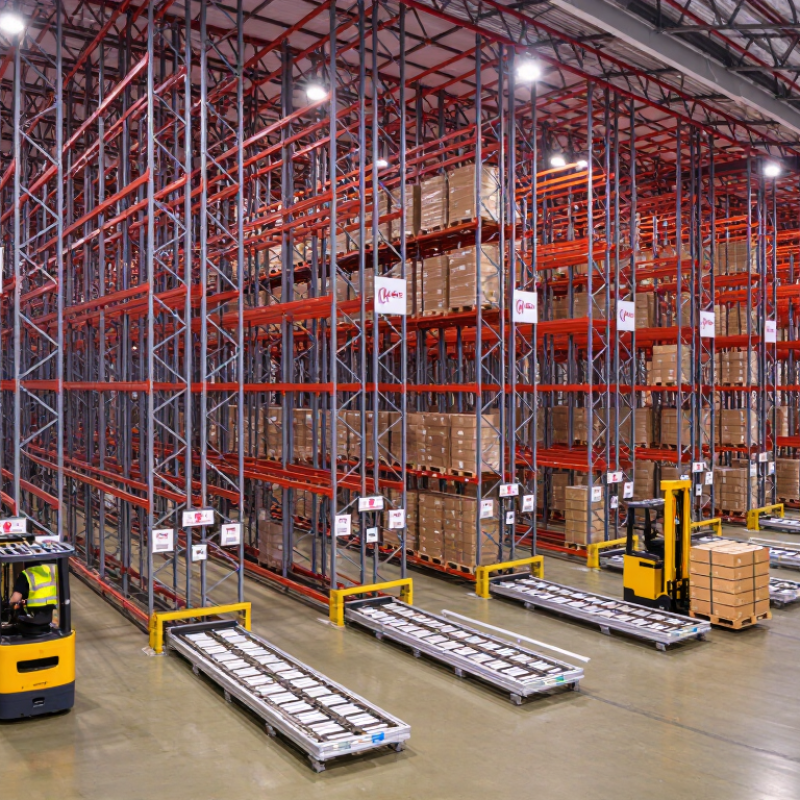
| Throughput and peak demand | Estimate pallet movements per hour or shift, peak-season volumes, replenishment demand, and the number of loading and retrieval points needed. | A shuttle can move pallets within a lane while forklifts perform other handling tasks, which may help reduce forklift travel into the rack. | Throughput varies with lane arrangement, shuttle quantity, travel distance, lift-truck availability, and operating procedures. Request a capacity estimate based on real demand data. |
| Forklift fleet and workflow | Check truck type, aisle width, lift height, operator routes, charging or fueling arrangements, and how pallets are presented to the system. | It may be worth considering where reducing forklift entry into storage lanes is an operational goal. | Forklifts are still required to load and retrieve pallets at lane openings. Review the complete workflow rather than assessing the shuttle in isolation. |
| Operating mode and inventory control | Define whether lanes will operate on a FIFO or LIFO basis, how locations will be assigned, and how operators will track pallet movements. | Shuttle systems can be configured for different stock-flow approaches, depending on lane access and the overall layout. | Choose the operating mode based on product rotation, expiration dates, and order processes. Confirm how the controls integrate with warehouse procedures or software. |
| Safety and site requirements | Review rack design, load-handling procedures, operator training, pedestrian separation, inspections, and applicable local safety requirements. | Remote pallet movement can reduce the need for forklifts to travel into deep storage lanes. | It does not remove the need for safe truck operation, sound rack design, inspections, and documented procedures. Obtain a site-specific safety review. |
| Maintenance and business continuity | Ask about routine inspections, spare parts, battery or charging needs, service response, operator training, and contingency procedures. | It may be appropriate when the operation can support the required equipment and maintenance processes. | Consider how a shuttle outage would affect lane access and daily operations. Compare maintenance arrangements and lifecycle costs before choosing. |
| Total cost and return | Compare rack and shuttle costs with installation, controls, training, maintenance, energy, and any changes to material-handling equipment. | It may offer value where the benefits of higher storage density or reduced forklift travel justify the investment. | Calculate using site-specific capacity, labor, throughput, and operating-cost assumptions; avoid relying on a generic payback estimate. |



 © Copyright 2020 Tianjin Tanghaidongyang Valve Co., Ltd. All Rights Reserved.