| What a wire mesh filter is | A filter made from interwoven stainless steel wires that form openings through which fluid or air can pass while larger particles are retained. | It is a physical screening medium. Its performance depends on the opening size, wire diameter, weave, filter construction, and operating conditions. |
| Common stainless steel grades | Type 304 is widely used for general-purpose applications. Type 316 and 316L contain molybdenum and are often selected for improved resistance to chloride-containing environments. | Grade selection should account for the process fluid, temperature, cleaning chemicals, and exposure conditions. No grade is resistant to every corrosive environment. |
| Mesh count and opening | Mesh count generally describes the number of openings per linear inch. The clear opening also depends on wire diameter. | For a regular square weave, approximate opening in millimetres = (25.4 ÷ mesh count per inch) − wire diameter in millimetres. This estimate does not apply to every weave or filter construction. |
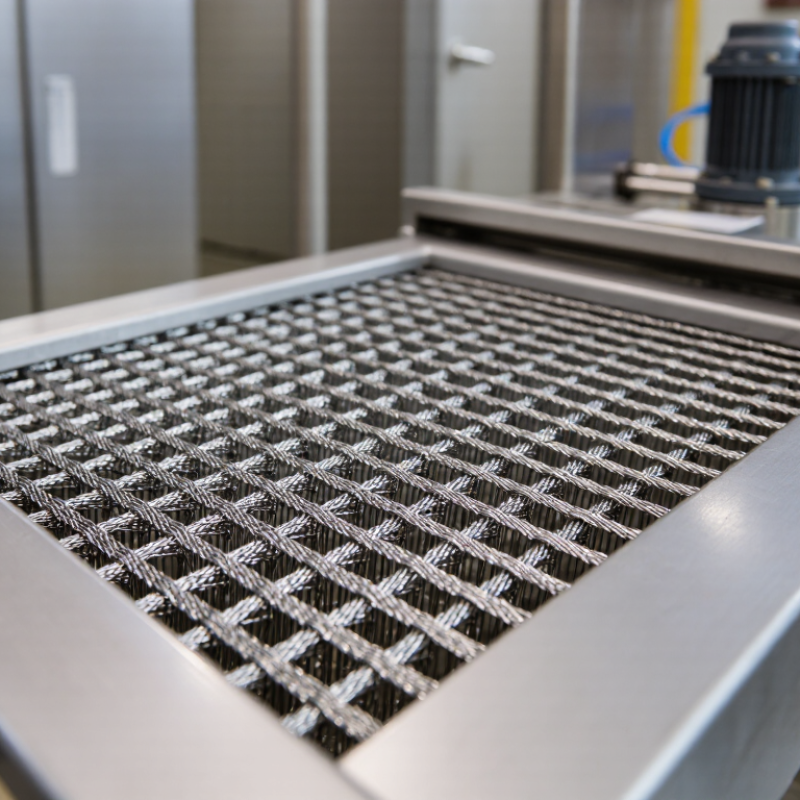
| Common weave styles | Plain weave uses an alternating over-and-under pattern. Twill weave passes each wire over two or more wires before going under, while Dutch weaves use different wire sizes or spacing to create a tighter filtering structure. | Weave choice affects strength, flow, opening geometry, and particle retention. The appropriate design depends on the required filtration duty. |
| How it is made: wire preparation | Stainless steel wire is selected and drawn or supplied to the required diameter. The wire is checked for dimensions and surface condition before weaving. | Wire diameter and consistency influence the finished mesh opening and mechanical strength. |
| How it is made: weaving | Warp wires are held lengthwise while weft wires are woven across them on a mesh loom according to the selected weave pattern. | Weaving controls mesh count and structure. Some filter designs use sintered or layered mesh, which involves additional processing beyond ordinary weaving. |
| How it is made: finishing | The woven mesh may be cut, formed, welded, or attached to a support or frame. Edges can be finished to suit the filter assembly. | Finishing methods vary with the product design and intended service conditions. |
| How it is made: inspection | Finished mesh may be checked for dimensions, weave consistency, visible defects, and conformity with specified requirements. | For critical applications, buyers can specify inspection criteria and request documentation appropriate to the product and process. |
| Why it is used | Stainless steel mesh can provide mechanical strength, corrosion resistance in suitable environments, and tolerance of repeated cleaning. | Reusability and service life depend on the alloy, mesh design, contaminants, cleaning method, and operating conditions. |
| Typical applications | Applications include liquid and gas straining, process filtration, screens, and protective or separation elements in industrial equipment. | Mesh filters are not automatically suitable for fine or absolute filtration; the required retention level and system design should be verified for each application. |



 © Copyright 2020 Tianjin Tanghaidongyang Valve Co., Ltd. All Rights Reserved.