| Meaning of “U100” | A commercial size or quality code used by a buyer or supplier for a relatively large, uniform dried-apple specification. | Not a universally harmonized legal grade; the exact definition must be stated in the purchase specification. | A written definition prevents misunderstandings between exporters, importers, and distributors. |
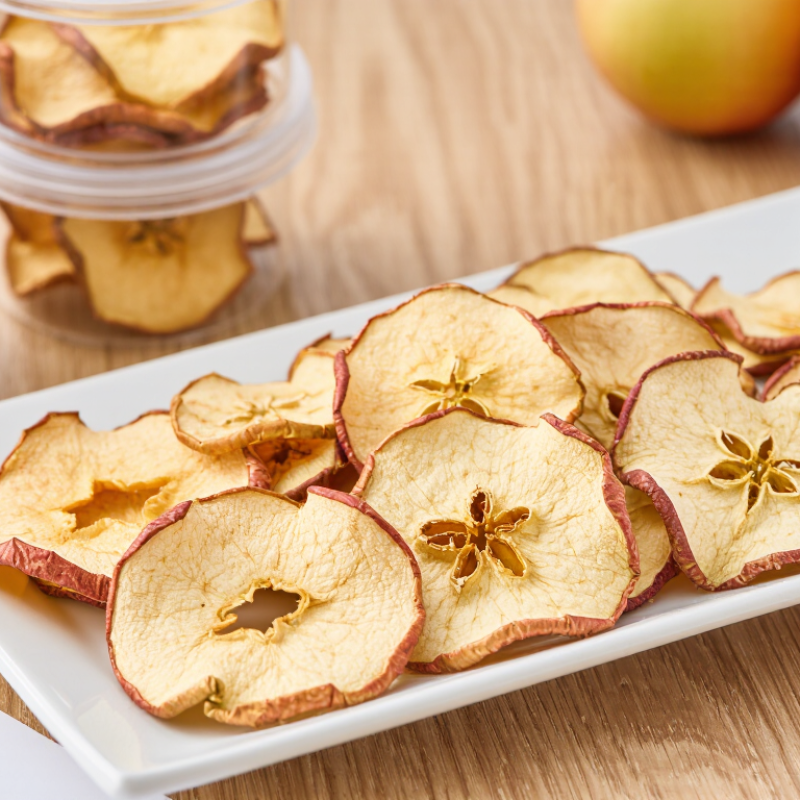
| Product Form | Usually supplied as apple rings, slices, chunks, or dices, depending on the buyer’s product application. | The contract should specify cut type, thickness, diameter or piece size, and allowable breakage. | Consistent cuts improve portion control, visual presentation, and processing efficiency. |
| Size Uniformity | U100 generally signals a preference for controlled and relatively uniform sizing rather than mixed small fragments. | A practical specification may include a defined size range and a maximum percentage of undersized pieces. | Uniformity supports stable packing density, predictable rehydration, and consistent retail appearance. |
| Moisture Content | A key quality and shelf-life indicator for dried apple. | Many commercial dried-fruit specifications target approximately 15%–25% moisture, subject to cut, process, and contract requirements. | Moisture affects texture, microbial stability, weight yield, and freight economics. |
| Water Activity | Used together with moisture content to evaluate storage stability. | A water activity below 0.60 is commonly associated with improved control of microbial growth, but the finished product must be validated by testing. | Helps reduce the risk of mold growth, fermentation, and quality deterioration during international transit. |
| Color and Appearance | May be natural cream to light brown or treated to retain a lighter color, depending on processing. | Specify acceptable color range, absence of excessive browning, and limits for foreign material and damaged pieces. | Clear visual criteria reduce claims and make incoming inspection more objective. |
| Sulfur Dioxide Status | The product may be sulfur-treated or unsulfured; “U100” alone does not define sulfite status. | Declare sulfite use and verify residual sulfur dioxide against the destination market’s legal limit and labeling rules. | Sulfite requirements vary by country and can affect labeling, allergen declarations, and customs compliance. |
| Food Safety Controls | The U100 code describes a commercial grade, not a food-safety certification. | Common verification areas include microbiological testing, pesticide residues, heavy metals, foreign materials, and mycotoxins where applicable. | Documented testing supports importer approval and reduces border, recall, and rejection risks. |
| Ingredient Profile | Can be supplied as 100% apple or with permitted processing aids, depending on the specification. | The ingredient declaration should identify apple, preservatives, antioxidants, oils, or other processing aids when used. | Accurate ingredient information is essential for clean-label claims and regulatory documentation. |
| Packaging Options | Commonly packed in food-grade inner bags with cartons, sacks, or larger bulk formats. | The purchase order should state net weight, packaging material, pallet configuration, lot coding, and storage instructions. | Suitable packaging protects the product from moisture, oxygen, odor transfer, and physical damage. |
| Shelf-Life Expectation | Shelf life depends on moisture, water activity, treatment, packaging, and storage conditions. | Commercial shelf-life claims commonly range from approximately 12 to 24 months when properly packed and stored, subject to validation. | Longer validated shelf life can simplify inventory planning and international distribution. |
| Storage Conditions | Requires protection from heat, humidity, direct sunlight, pests, and strong odors. | Store in a cool, dry, clean environment and follow the validated product specification; avoid temperature and humidity abuse. | Good storage practice preserves texture, color, flavor, and microbiological quality. |
| Best-Fit Applications | Suitable for snack mixes, breakfast cereals, bakery products, confectionery, foodservice, and ingredient manufacturing. | Select ring, slice, chunk, or diced formats according to the finished-product process. | A defined U100 specification helps buyers match raw-material size with production equipment and end-use requirements. |
| Documents for Import | The grade code should appear alongside a full product specification rather than being used as the only product description. | Typical documents include commercial invoice, packing list, certificate of analysis, lot traceability records, and any required health or origin documents. | Complete documentation supports customs clearance, quality approval, and supply-chain traceability. |



 © Copyright 2020 Tianjin Tanghaidongyang Valve Co., Ltd. All Rights Reserved.