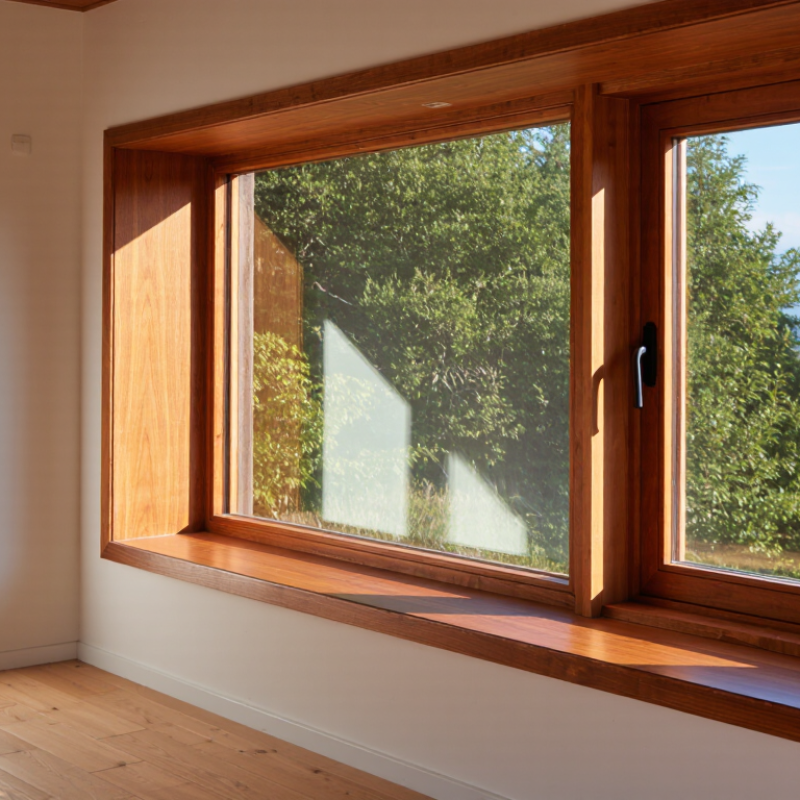
| What a wooden frame is | A window frame made primarily from timber. It holds the glazing and sash and connects the window assembly to the building opening. | Frame design, glazing, seals, and installation all affect the window’s overall performance. |
| Common timber choices | Softwoods such as pine and spruce, and hardwoods such as oak and meranti, are used for window components. | Species differ in appearance, workability, durability, availability, and cost. Suitability depends on design and exposure. |
| Selecting the wood | Timber is selected and graded for factors such as strength, defects, moisture condition, and intended use. | Appropriately dried, stable timber helps reduce the risk of excessive movement after manufacture. |
| Preparing components | Timber is cut to size, planed, and machined to form the frame sections, rebates, joints, and profiles required by the design. | Accurate machining helps components fit together and provides the required locations for glazing and seals. |
| Joining the frame | Frame members are assembled using suitable joinery, adhesives, or mechanical fixings, depending on the construction method. | Strong, square joints help the frame retain its shape and support smooth sash operation. |
| Engineered timber | Some frames use laminated timber made by bonding multiple wood sections together, often with the grain arranged to improve dimensional stability. | The performance of engineered components depends on their materials, bonding, design, and manufacturing quality. |
| Surface protection | Before glazing or installation, surfaces may be sanded and coated with paint, stain, or another finish suitable for exterior exposure. | Coatings need inspection and periodic maintenance; exposed or damaged areas may require attention sooner. |
| Glazing and sealing | Glass is fitted into the frame or sash and secured using the system’s glazing method. Weather seals are added where specified. | The type of glass, seals, and installation details influence insulation, noise reduction, and resistance to air and water entry. |
| Why choose timber | Wood offers a natural appearance, can be shaped for different designs, and can generally be repaired, sanded, or refinished. | Timber is a natural material, so it requires suitable protection and ongoing care, particularly where exposed to weather. |
| Care and maintenance | Keep frames clean, check coatings and seals, and address cracks, peeling finish, or water damage promptly. | Maintenance frequency varies with climate, exposure, finish, and the condition of the window. |



 © Copyright 2020 Tianjin Tanghaidongyang Valve Co., Ltd. All Rights Reserved.