| Brush stays wet | Moisture left on the bristles and handle can support mold growth, especially when drying is slow. | Rinse the brush after use, shake off excess water, and store it upright where air can circulate. | The bristles should be able to dry between uses. |
| Closed travel container | A damp brush in a closed container has limited airflow and may remain wet longer. | Let the brush dry before placing it in a case. Use a ventilated holder when possible. | Avoid sealing a wet brush in a bag or case. |
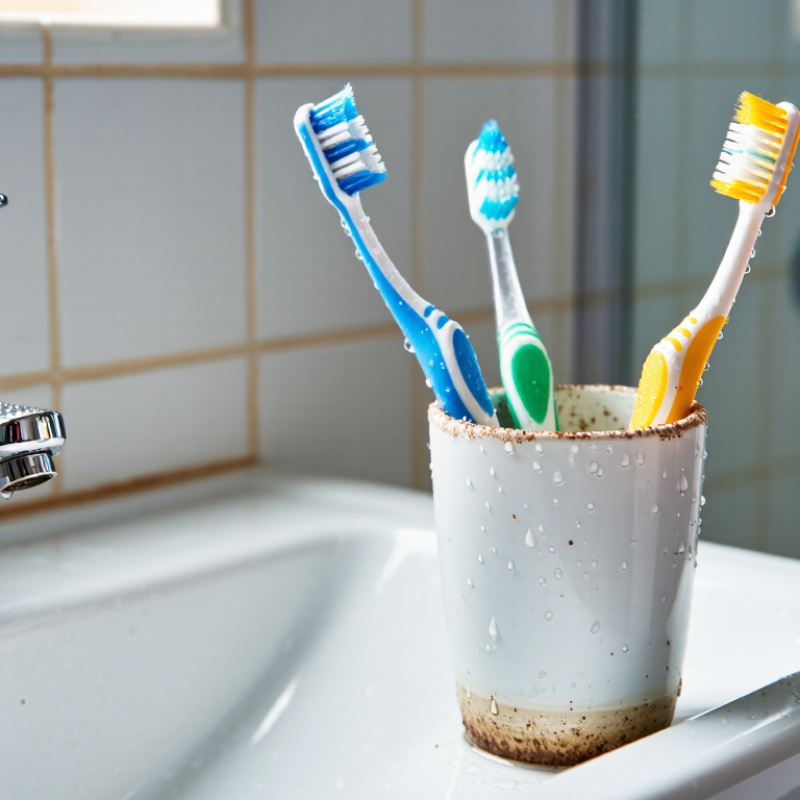
| Shared or crowded holder | Brushes touching one another can transfer germs and keep neighboring bristles damp. | Store brushes separately, upright, and without their bristles touching. Do not share toothbrushes. | Leave space between brush heads. |
| Dirty or damp holder | Water and residue that collect in a holder can create a persistently damp storage area. | Wash the holder regularly, remove standing water, and dry it before replacing the brushes. | Check the bottom and openings for pooled water or visible residue. |
| Humid, poorly ventilated bathroom | High humidity slows drying and can encourage mold growth on damp surfaces. | Improve ventilation after bathing and keep the toothbrush away from persistently wet areas. | Notice whether the room and holder remain damp for long periods. |
| Visible mold or persistent musty odor | Visible growth or an unusual odor may indicate contamination that rinsing alone cannot reliably remove. | Discard the toothbrush or replaceable brush head, then clean and dry the holder before using a new one. | Replace it sooner if the bristles are visibly damaged or contaminated. |
| Worn or frayed bristles | Worn bristles clean less effectively and may be harder to rinse thoroughly. | Replace the toothbrush about every 3–4 months, or sooner if the bristles become frayed. | Check the bristles regularly; replacement timing may vary with wear. |



 © Copyright 2020 Tianjin Tanghaidongyang Valve Co., Ltd. All Rights Reserved.