Why Is Fuel Tank Quality Important for Global Buyers?
For global buyers, a Fuel Tank is not merely a molded container. It protects fuel, controls vapor, and supports vehicle safety in daily operation. A weak seam may remain invisible during inspection. Under heat, vibration, or impact, that small defect can become a serious failure.
The U.S. Environmental Protection Agency’s Automotive Trends Report shows that average new-vehicle fuel economy reached about 27.1 miles per gallon for model year 2022. As efficiency improves, tank design must also control evaporative emissions and maintain stable fuel delivery. NHTSA’s Federal Motor Vehicle Safety Standard No. 301 further evaluates fuel-system integrity after vehicle crashes. These requirements show why material selection, weld quality, pressure testing, and traceable production records matter to international purchasers.
Dr. John B. Heywood, an MIT automotive engineering authority, has often stressed a practical principle: “The details matter.” That principle fits every Fuel Tank project. A supplier may present an attractive price. The real questions are less comfortable. Can the tank survive repeated thermal cycles? Does the supplier validate resin compatibility? Are test results consistent across production batches?
The answer cannot depend on a polished sample alone. It requires factory experience, documented testing, and honest communication about limitations. ISO and UNECE-based quality practices can help, but paperwork does not replace engineering judgment. Buyers should examine wall thickness, barrier-layer performance, leak-test methods, and field-return data. Quality costs attention before purchase. It costs much more after failure.
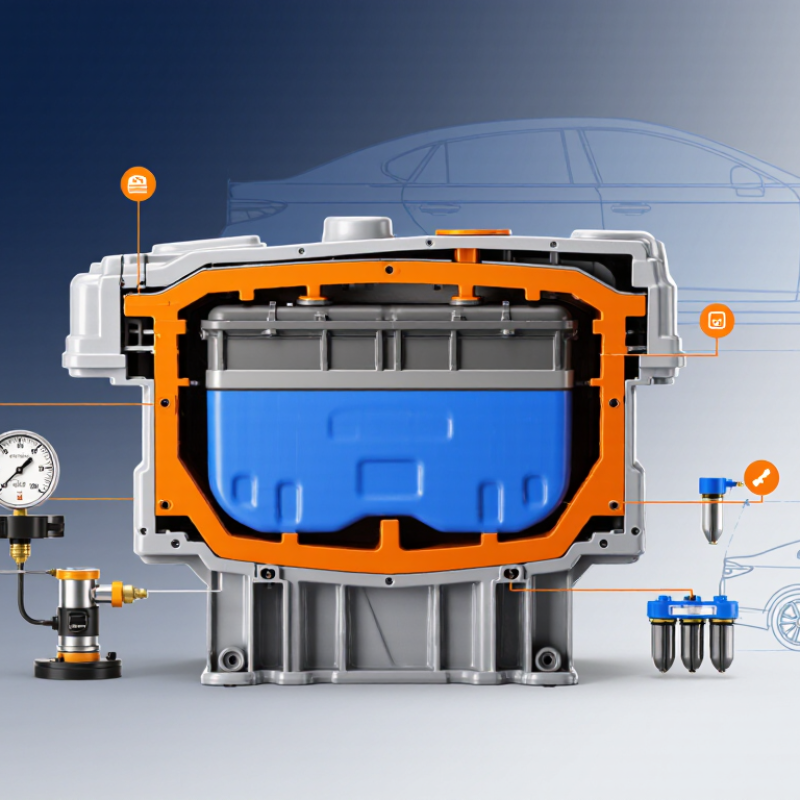
What Defines Fuel Tank Quality?
Fuel tank quality is defined by more than appearance or capacity. The material must resist corrosion, vibration, temperature changes, and contact with the stored fuel. Suitable steel or engineered plastic should have verified thickness and consistent composition. Welds need smooth penetration, clean edges, and no visible pores. A polished surface can mislead.
Reliable manufacturers support quality with pressure tests, leak tests, dimensional checks, and material records. Tank fittings should seal firmly and remain accessible during maintenance. Venting, mounting points, and protective shields also deserve attention. For global buyers, documentation should identify production batches, inspection results, and applicable transport or safety requirements. Requirements differ by market, so buyers should confirm them before ordering.
Tips: Ask for test reports and sample inspection photos. Check weld areas closely. Confirm compatibility with the intended fuel and climate. Inspect packaging, because shipping damage can weaken a good tank. No inspection method catches everything. An independent review adds confidence, although it cannot replace proper design verification. Quality sometimes fails through small details, such as a poorly protected connector or an inaccurate mounting hole.
Why Safety Standards Matter in Global Markets
Why Is Fuel Tank Quality Important for Global Buyers?
Safety standards matter because fuel tanks operate under pressure, heat, vibration, and constant movement. A small material weakness can become a serious leak during transport or daily use. In my experience, reliable buyers examine more than appearance. They review wall thickness, weld quality, corrosion resistance, and pressure-test records. These details reveal how a tank may perform after months of service. Certification also matters. However, a certificate alone cannot replace independent inspection and practical testing.
Safety rules differ across markets, so exporters must check the destination’s requirements early. Standards may cover materials, ventilation, labeling, flame resistance, and emergency protection. Traceable production records improve confidence when questions arise later. Clear documentation helps inspectors, installers, and maintenance teams work consistently. It also reduces delays at customs or during equipment approval.
Tips: Request recent test reports, material certificates, and inspection images. Confirm temperature and pressure limits before ordering. Ask how defects are recorded and corrected. Check whether fittings match local systems. Do not judge quality by price alone. That shortcut often creates expensive problems. A careful review may still miss something, and that is worth admitting. Independent testing remains useful, especially when specifications seem unusually perfect.
How Quality Influences Fuel Efficiency and Vehicle Reliability
Fuel tank quality directly affects fuel efficiency through containment, pressure control, and accurate fuel delivery. A tank with poor welds may develop micro-leaks, allowing fuel vapors to escape before combustion. Weak internal coatings can also create rust particles, which may restrict filters or damage pumps. These faults rarely appear on a showroom checklist.
The U.S. EPA’s 2024 Automotive Trends Report recorded average new-vehicle fuel economy at about 26.4 miles per gallon for model year 2022. Small losses matter at that scale. A poorly calibrated fuel-level sender can trigger inefficient driving habits, while distorted tank pressure may affect vapor management. Buyers should request pressure-decay results, seam inspection records, and permeability test data. Look closely at mounting points, too. Vibration often begins there.
Reliability depends on more than the tank shell. NHTSA’s Federal Motor Vehicle Safety Standard 301 requires fuel-system integrity during specified crashes, showing why structural design matters. Corrosion resistance, impact protection, and stable fuel-pump seating reduce roadside failures. Yet quality testing is not perfect. Laboratory pressure tests may miss damage caused by years of heat, dust, and uneven roads. That is the uncomfortable part. Global buyers should compare material specifications with field-service records, not trust a single certificate. A tank that passes today may still age badly.
Why Fuel Tank Quality Matters for Global Buyers
Modeled annual fuel-equivalent loss from different tank leakage rates
Interpretation: A well-manufactured fuel tank should minimize leakage, vapor loss, corrosion, and deformation. Even a small leakage rate can increase fuel consumption and may reduce vehicle reliability by allowing moisture or contaminants to enter the fuel system.
Calculation basis: The model assumes a 50-liter tank, fuel consumption of 7 liters per 100 kilometers, and 15,000 kilometers of annual driving. Annual fuel use is therefore 1,050 liters. The leakage-rate scenarios are engineering examples, not field-failure statistics.



 © Copyright 2020 Tianjin Tanghaidongyang Valve Co., Ltd. All Rights Reserved.