| Global market value | The global umbrella market was valued at approximately US$7.1 billion in 2023. | Confirms that umbrellas are a large, established consumer-product category with broad international demand. |
| Market growth outlook | The market is projected to expand at approximately 3.9% CAGR from 2024 to 2030. | Supports forward purchasing, assortment expansion, and long-term sourcing strategies. |
| Indicative 2030 market value | Applying the reported 3.9% CAGR to the 2023 base produces an indicative value of approximately US$9.3 billion by 2030. | Indicates continued category potential for importers, distributors, retailers, and promotional-product buyers. |
| Core functional benefit | Rain umbrellas provide portable protection from precipitation while remaining reusable and easy to carry. | Creates repeat demand across commuting, travel, education, outdoor work, events, and household use. |
| Weather-related demand | Demand is influenced by rainfall frequency, monsoon seasons, tropical storms, winter precipitation, and regional climate variability. | Global buyers can align inventory with local rainfall calendars and seasonal demand peaks. |
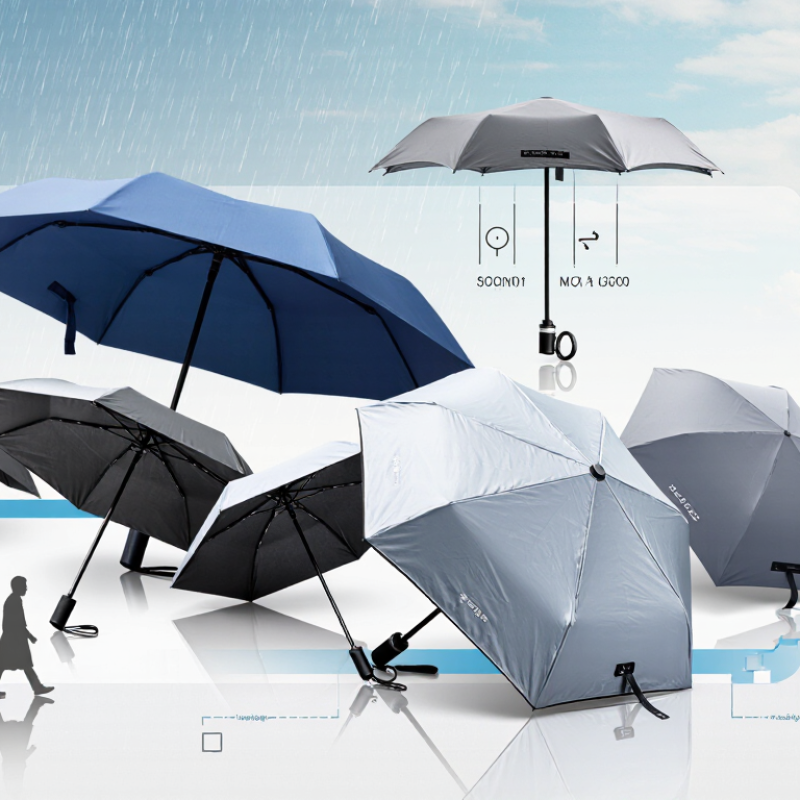
| Product formats | Common formats include straight umbrellas, folding umbrellas, automatic-opening umbrellas, golf-style umbrellas, and child-sized umbrellas. | A multi-format portfolio helps buyers serve different needs involving portability, coverage, convenience, and price. |
| Key construction materials | Typical components include polyester or nylon canopy fabric, steel or fiberglass ribs, metal or aluminum shafts, and plastic or rubber handles. | Material selection affects durability, weight, corrosion resistance, wind performance, and landed cost. |
| Portability requirement | Compact folding designs are intended for handbags, backpacks, luggage, vehicles, and office storage. | Portable models are suitable for urban commuters, travelers, students, and convenience-focused retail channels. |
| Durability considerations | Important performance factors include frame strength, rib flexibility, canopy water resistance, seam quality, opening mechanism reliability, and wind stability. | Higher durability can reduce replacement frequency and support better value perception in competitive markets. |
| Procurement priorities | Common buyer criteria include weather performance, packed size, weight, safety, material quality, packaging efficiency, compliance, and total delivered cost. | A balanced specification helps global buyers manage quality, logistics, customer satisfaction, and margin requirements. |



 © Copyright 2020 Tianjin Tanghaidongyang Valve Co., Ltd. All Rights Reserved.