| Compressor intake location | Draws ambient air from a clean, well-ventilated area. | The intake should be positioned away from vehicle exhaust, combustion vents, solvent vapors, storage tanks, and other pollution sources. | Carbon monoxide, carbon dioxide, hydrocarbons, and airborne particles. | Source-air control is essential because filtration cannot reliably correct every sudden or high-level contaminant event. |
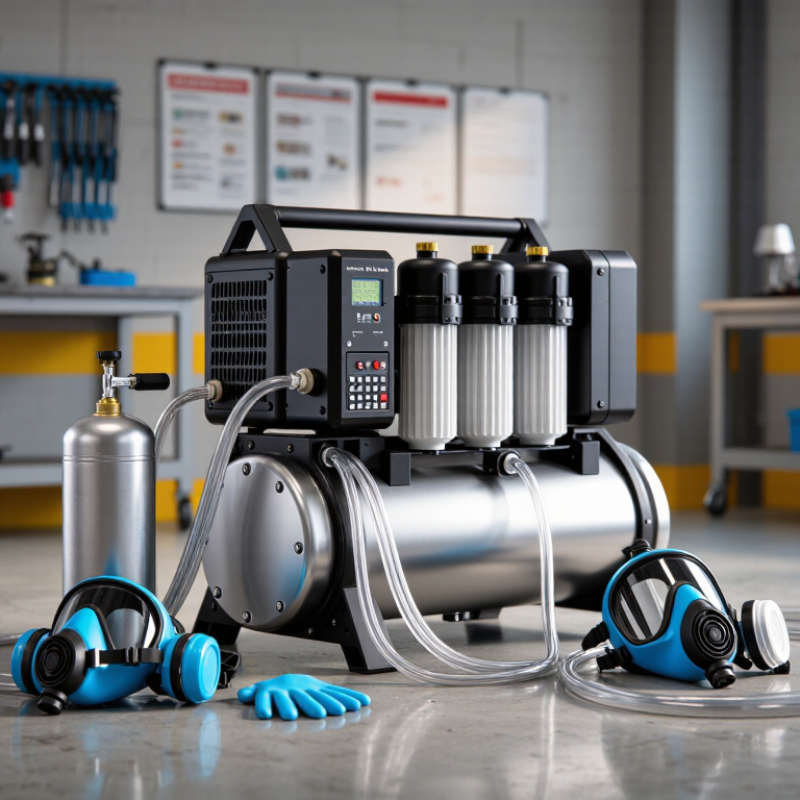
| Stage 1: Intake particle pre-filter | Removes coarse dust and debris before compression and downstream treatment. | A commonly used design range is approximately 5–10 micrometres nominal particle filtration, depending on the selected element. | Dust, rust, pollen, and larger solid particles. | Supports clean-air production but does not by itself establish breathing-air compliance. |
| Stage 2: Coalescing filter | Separates liquid water and oil aerosols from compressed air. | Fine coalescing elements are commonly specified around 0.01 micrometre particle ratings, with efficiency and pressure drop dependent on the product and flow rate. | Liquid water, compressor oil mist, and fine aerosols. | Helps control oil and moisture but cannot remove carbon monoxide or carbon dioxide. |
| Stage 3: Desiccant or membrane dryer | Reduces water vapor and helps prevent condensation in storage vessels and breathing-air lines. | The required pressure dew point is selected according to ambient temperature, system pressure, and application conditions. | Condensation, corrosion, freezing, and excessive humidity. | Moisture control supports hygienic and reliable delivery; the applicable breathing-air specification and operating procedure determine acceptance criteria. |
| Stage 4: Activated-carbon adsorber | Adsorbs oil vapors and many organic vapors that remain after aerosol separation. | Performance depends on carbon quantity, contact time, temperature, humidity, contaminant concentration, and timely replacement. | Oil vapor, hydrocarbon vapor, and objectionable odors. | Supports the CGA G-7.1 requirement for no pronounced odor and the applicable hydrocarbon limit, but requires verification by testing. |
| Stage 5: Final particulate filter | Captures residual particles released by the treatment system or piping. | A final filter is commonly selected with a fine rating such as 0.01 micrometre, subject to the manufacturer’s tested efficiency and flow limits. | Fine particles, carbon dust, and downstream line debris. | Provides the final physical barrier; it does not remove gaseous carbon monoxide or carbon dioxide. |
| Carbon monoxide monitoring | Measures a toxic gas that may enter through intake contamination or compressor-related conditions. | CGA G-7.1 Grade D commonly specifies a maximum of 20 ppm carbon monoxide. | Carbon monoxide poisoning risk. | Continuous or scheduled monitoring is needed because standard particulate and coalescing filters do not remove carbon monoxide. |
| Carbon dioxide monitoring | Confirms that carbon dioxide remains within the breathing-air specification. | CGA G-7.1 Grade D commonly specifies a maximum of 1,000 ppm carbon dioxide. | Excessive carbon dioxide from contaminated intake air or ventilation problems. | Requires source-air management and analytical verification; filtration alone is not a substitute for monitoring. |
| Oxygen monitoring | Verifies that the delivered breathing air contains an appropriate oxygen concentration. | CGA G-7.1 Grade D commonly specifies 19.5–23.5% oxygen by volume. | Oxygen deficiency or enrichment. | Oxygen concentration must be confirmed by an appropriate analyzer; filters do not regulate oxygen content. |
| Hydrocarbon and odor control | Controls compressor oil carryover, hydrocarbon contamination, and noticeable odors. | CGA G-7.1 Grade D commonly specifies no pronounced odor and a condensed hydrocarbon limit of 5 mg/m³. | Oil contamination, solvent vapors, and unpleasant or potentially harmful odors. | Requires suitable filtration, clean intake air, maintenance, and periodic laboratory or field testing. |
| Maintenance and validation | Preserves filtration capacity and confirms that air quality remains within specification. | Replace elements according to differential pressure, service life, operating hours, contamination load, and test results rather than time alone. | Filter breakthrough, saturated carbon, pressure drop, leaks, and contaminated storage vessels. | Compliance is demonstrated through documented inspection, maintenance, monitoring, and breathing-air analysis. |



 © Copyright 2020 Tianjin Tanghaidongyang Valve Co., Ltd. All Rights Reserved.