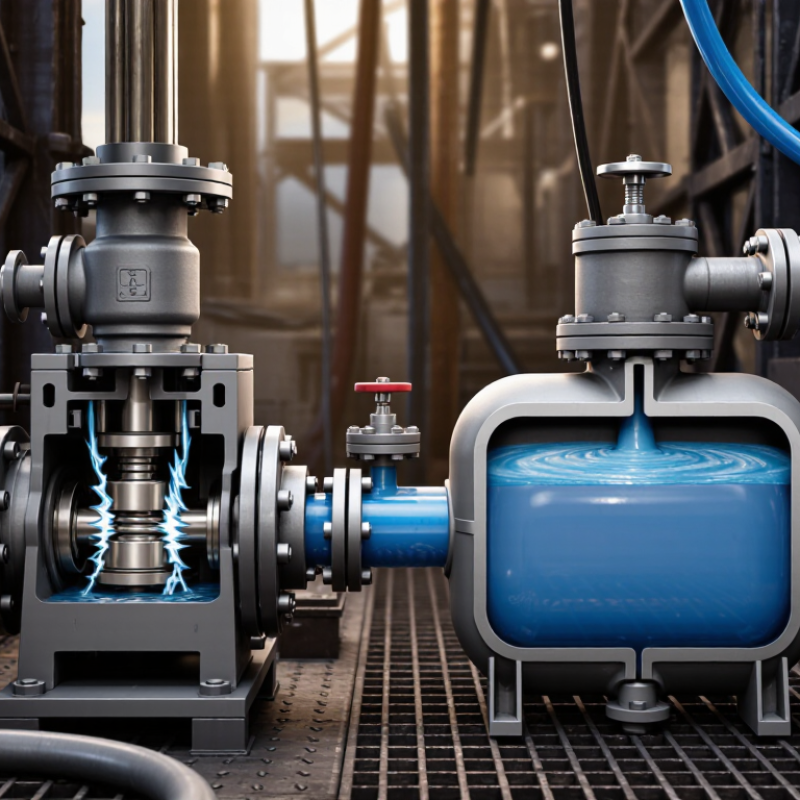
| Definition | A mud pump pulsation dampener is a pressure-vessel device installed in the discharge line of a reciprocating drilling-fluid pump. | It reduces pressure and flow fluctuations produced by the pump’s individual piston or plunger strokes. |
| Primary Function | The dampener stores and releases a small amount of hydraulic energy during each pumping cycle. | This smooths the discharge stream and helps stabilize pressure in the circulating system. |
| Working Principle | A compressible gas, normally nitrogen, is separated from the drilling fluid by a bladder, diaphragm, or piston. Pressure variations compress and expand the gas volume. | The gas cushion absorbs pressure peaks and supports flow during the lower-pressure portion of the stroke cycle. |
| Typical Installation Location | It is generally mounted on or immediately downstream of the mud pump discharge manifold. | Positioning it close to the pump helps reduce the transmission of pulsation into the high-pressure discharge piping. |
| Pressure Pulsation Source | Reciprocating mud pumps generate non-uniform flow because their pistons or plungers move in repeated suction and discharge cycles. | Without damping, these cyclic pressure changes can cause vibration, noise, and mechanical stress. |
| Effect on Discharge Pressure | The device does not create additional pump pressure; it moderates rapid pressure changes around the operating pressure. | More stable pressure improves control of the circulating system and reduces pressure spikes. |
| Effect on Flow Delivery | The dampener makes the instantaneous discharge flow more uniform, although the pump remains a reciprocating positive-displacement machine. | Smoother flow supports more consistent hydraulic performance at the bit and through surface equipment. |
| Protection of Piping | By absorbing rapid pressure changes, the dampener reduces cyclic loading in discharge pipes, fittings, valves, and connections. | Lower vibration and fatigue loading can help reduce leakage, loosening, and premature component damage. |
| Protection of Instruments | Pressure gauges, transmitters, and other monitoring instruments may be exposed to repeated pressure spikes without adequate damping. | Reduced pulsation improves measurement stability and can extend instrument service life. |
| Common Construction | Typical assemblies include a pressure-rated shell, gas chamber, separator element, flange or threaded connection, and safety or charging components. | The design must match the pump pressure rating, connection size, drilling-fluid service, and applicable safety requirements. |
| Gas Used for Precharge | Nitrogen is commonly used because it is dry and comparatively inert. Oxygen or compressed air should not be used where the equipment manufacturer prohibits them. | Correct gas selection reduces contamination, oxidation, and safety risks associated with unsuitable gases. |
| Precharge Requirement | The gas precharge must be set according to the dampener design, operating pressure, fluid service, and manufacturer’s procedure. | Incorrect precharge can reduce damping performance, damage the separator element, or create unsafe operating conditions. |
| Maintenance Checks | Routine checks commonly include gas precharge, external leakage, shell condition, flange tightness, valve condition, and separator integrity. | Regular inspection helps identify loss of precharge, bladder or diaphragm failure, corrosion, and connection problems. |
| Safety Consideration | A pulsation dampener is a pressure vessel and must be isolated, depressurized, and verified safe before service. | Stored hydraulic and gas energy can cause serious injury if the unit is opened or serviced while pressurized. |
| Main Benefits | Pressure stabilization, lower vibration, reduced piping stress, improved instrument reliability, and smoother drilling-fluid circulation. | These benefits support safer operation, better equipment reliability, and more consistent drilling performance. |



 © Copyright 2020 Tianjin Tanghaidongyang Valve Co., Ltd. All Rights Reserved.