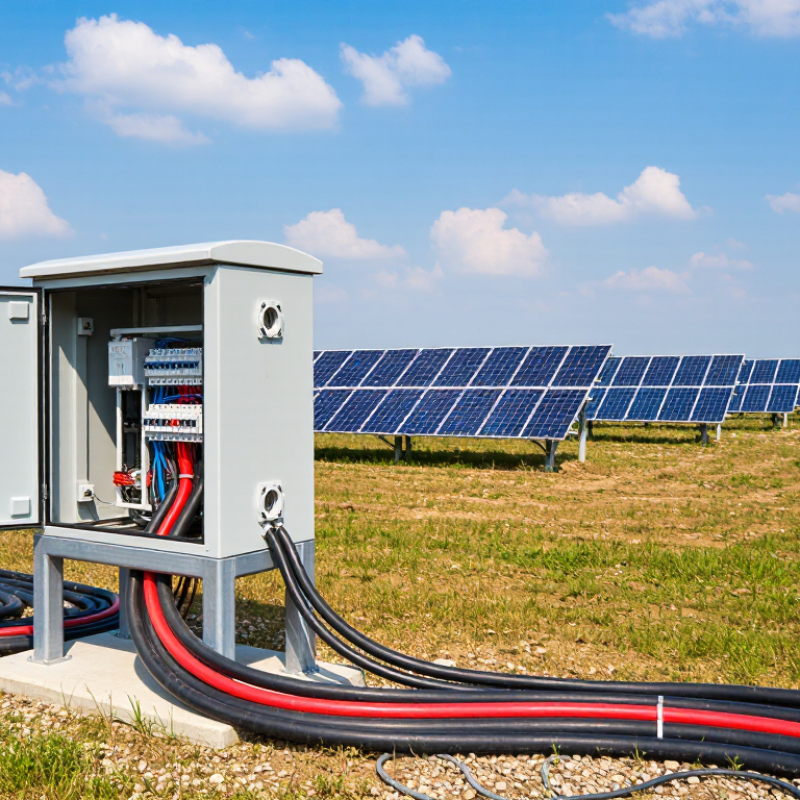
A solar combiner box gathers several photovoltaic strings before power reaches the inverter. It reduces cable runs and organizes the direct-current side of a project. This matters as arrays grow larger. IRENA’s Renewable Capacity Statistics 2024 reported more than 1,400 GW of global solar capacity by the end of 2023. More strings mean more conductors, terminations, and possible fault points.
Its key components perform distinct electrical functions. String fuses or circuit breakers limit fault current when one string feeds another damaged string. A DC disconnect allows technicians to isolate the array during inspection. Surge protective devices help divert transient overvoltage caused by lightning activity or switching events. Monitoring modules can measure string current and voltage, helping operators identify shading, loose terminals, or uneven performance. The IEC 62548 standard also emphasizes correct array wiring, protection, and isolation practices. Small errors spread.
Enclosure selection deserves practical attention. Outdoor boxes need suitable ingress protection, thermal management, and corrosion resistance for local conditions. NREL’s 2023 photovoltaic system cost benchmark shows that balance-of-system hardware remains a meaningful part of installed project costs, not an afterthought. A box with excessive capacity may waste money and space, while an undersized design can create heat and maintenance problems. In field work, labels sometimes fade faster than expected. That detail is easy to underestimate. Designers should verify maximum system voltage, short-circuit current, fuse coordination, conductor temperature, and available fault current before approval. A combiner box is useful, but poor specification can add risk rather than remove it.


 © Copyright 2020 Tianjin Tanghaidongyang Valve Co., Ltd. All Rights Reserved.