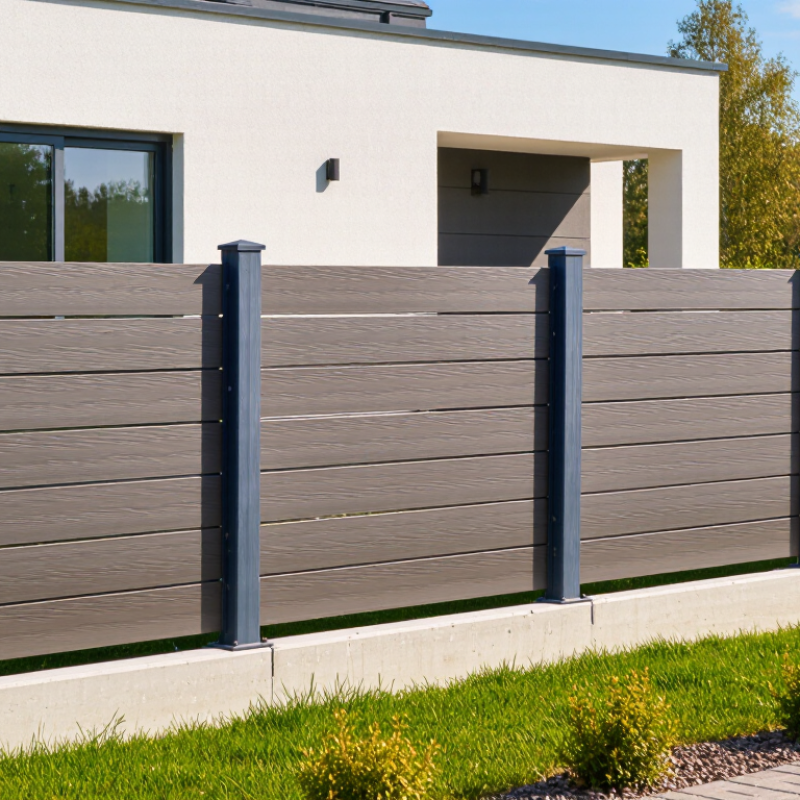
A WPC fence combines wood fibers with recycled or virgin polymers, creating boards that resemble timber but resist routine moisture damage. Buyers often choose it for consistent color, reduced painting, and easier cleaning. Grand View Research estimated the global wood-plastic composites market at approximately US$7 billion in 2023, with continued growth expected through 2030. That figure covers broader applications, not fencing alone. It still shows strong material interest, rather than guaranteed fence performance.
Before choosing a WPC fence, inspect the technical details, not only the surface finish. Ask for water absorption, UV exposure, impact, and color-retention test results. ASTM D7031 guidance emphasizes evaluating composite products under realistic weathering and structural conditions. Thermal movement also matters. A dark fence beside a sunny wall may expand noticeably during the day. Installers should leave the specified gaps and provide stable posts, drainage, and adequate airflow.
Maintenance is lower, not zero. Dust can collect in textured grooves, while poor drainage may encourage staining or biological growth. A 2024 market analysis from Grand View Research highlights durability and low maintenance as major WPC advantages, but buyers should question vague lifetime claims. The honest part is this: WPC can cost more upfront than basic timber. In return, it may reduce repainting and replacement work. Local climate, installation quality, and product formulation can change that calculation. A sample board viewed outdoors often reveals more than a polished brochure.



 © Copyright 2020 Tianjin Tanghaidongyang Valve Co., Ltd. All Rights Reserved.