| Process fluid and corrosion |
Identify the fluid, concentration, temperature, contaminants, and cleaning chemicals. Corrosion resistance depends on the complete operating environment. |
Stainless steel can offer useful corrosion resistance in many services. 316 stainless steel generally has better resistance to chloride-related pitting than 304, but neither grade is suitable for every chemical or chloride condition. |
Confirm compatibility for the body, disc, stem, fasteners, and seat—not just the body material. Consult corrosion data or a materials specialist for severe service. |
| Pressure and temperature |
Check operating and design pressure, temperature, pressure differentials, and any vacuum conditions. |
A stainless body can suit demanding environments, but allowable pressure and temperature depend on valve design, size, materials, seat, and applicable rating. |
Use the valve’s published pressure–temperature ratings. Do not assume the pipe’s pressure rating is also the valve’s rating. |
| Seat and sealing material |
Match the seat material to the fluid, temperature range, pressure differential, required leakage performance, and cleaning method. |
The stainless components provide structural support, while the seat largely determines sealing behavior and often limits the service temperature. |
Check the seat’s chemical-compatibility and temperature data, plus the specified shutoff or leakage class. |
| Valve design and shutoff needs |
Determine whether the valve is for on/off isolation, throttling, or both. Consider flow direction, pressure drop, and required shutoff tightness. |
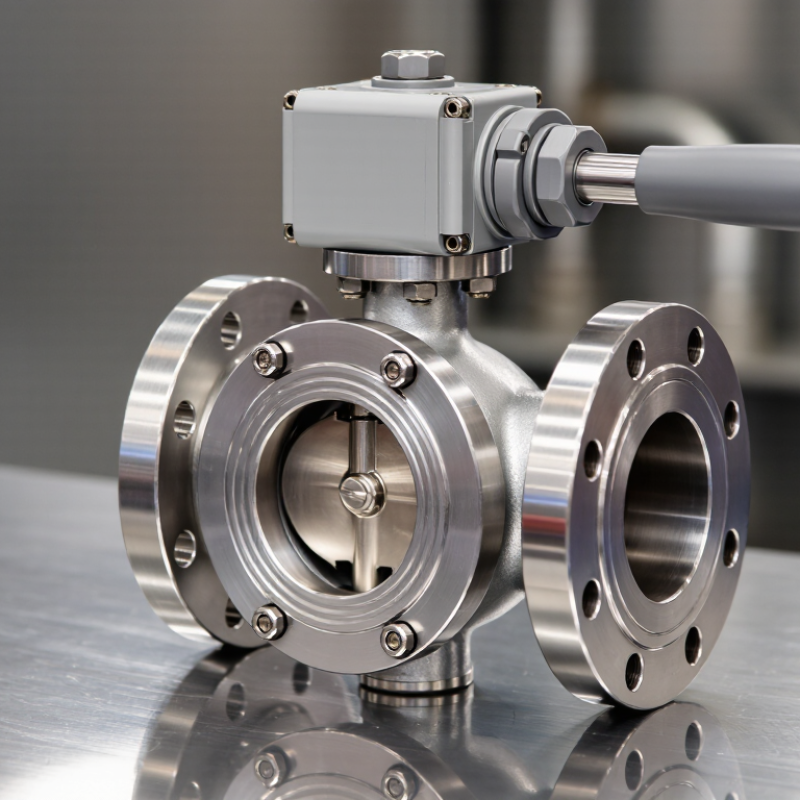
Butterfly valves are quarter-turn valves with a compact flow-control element. Their suitability for tight shutoff or throttling depends on the specific design and service conditions. |
Review the manufacturer’s flow and leakage data. For control duty, check the operating range and avoid prolonged operation where the valve is not designed to control effectively. |
| End connection and installation |
Choose a connection that matches the piping layout, flange standard, maintenance needs, and available installation space. |
Butterfly valves are available in wafer, lug, and flanged configurations. Wafer and lug styles can be compact; lug designs may allow certain end-of-line arrangements when specifically rated for them. |
Verify face-to-face dimensions, flange drilling, pressure class, bolt requirements, and whether the valve is approved for dead-end service. |
| Flow capacity and pipe size |
Consider required flow rate, available pressure drop, line velocity, and the valve’s flow coefficient (Cv or Kv). |
The compact quarter-turn design can be space-efficient, but the disc remains in the flow path and affects flow capacity and pressure loss. |
Size the valve using verified flow data and process calculations rather than selecting by pipe diameter alone. |
| Solids, abrasion, and deposits |
Assess suspended solids, fibers, abrasive particles, scaling, and the potential for material to collect around the disc or seat. |
Stainless steel can resist corrosion, but it does not by itself prevent erosion, abrasion, or fouling. Disc and seat geometry also matter. |
Confirm suitability for the actual solids and cleaning cycle. Consider a different valve design if the service is highly abrasive or prone to clogging. |
| Operation and automation |
Choose manual operation or an actuator, and define required operating speed, control signal, fail position, and cycling frequency. |
Quarter-turn operation can support compact manual or automated arrangements, subject to the valve’s torque requirements and actuator compatibility. |
Size the actuator for maximum differential pressure and service conditions; verify mounting, controls, and any required fail-safe action. |
| Standards, maintenance, and lifecycle |
Check applicable design, testing, dimensional, and regulatory requirements, along with inspection access and expected maintenance. |
Material durability and a compact design can be advantageous where corrosion resistance and space are important, but lifecycle performance depends on correct selection and upkeep. |
Specify the required standards and documentation, and compare total lifecycle cost—including installation, inspection, seat replacement, and downtime. |



 © Copyright 2020 Tianjin Tanghaidongyang Valve Co., Ltd. All Rights Reserved.